
The Make-Ready Engineering Timeline
Why make-ready engineering takes so long, what the industry is doing about it and how Vulcan Line Tools’ solves it.
What is Make-Ready Engineering?
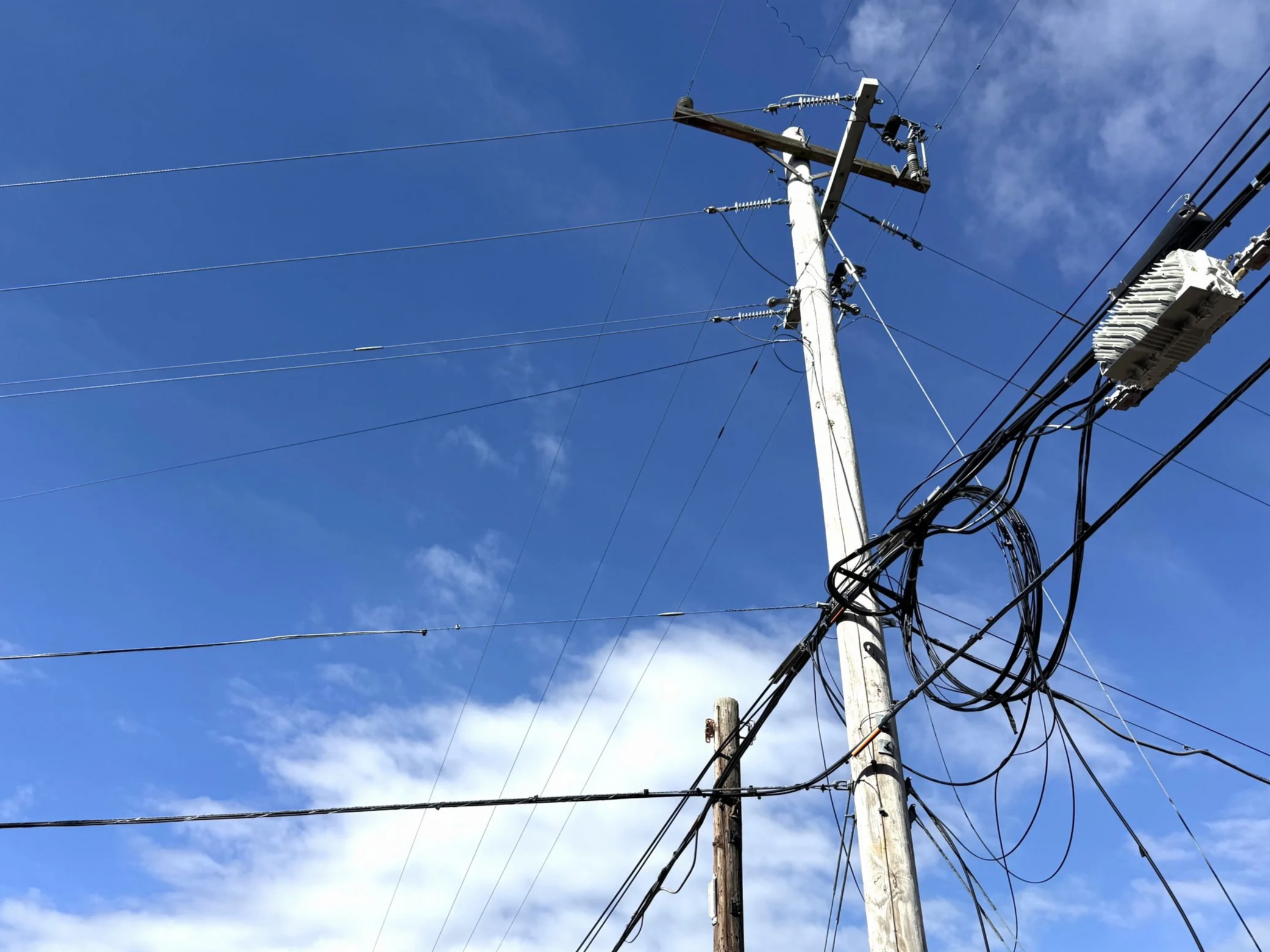
A power pole with multiple communication cable attachments.
Make-ready Engineering (MRE) is the process of assessing, designing and preparing utility poles the attachment new telecom cables. Engineers follow a long list of steps to ensure that the construction of their new cable will meet federal safety and clearance standards, promoting the longevity of the wire and the safety of its surroundings. This process involves evaluating present pole conditions, identifying what changes are required —including wire rearrangement and pole replacement — and producing engineering plans for how the required changes must be completed. A vital first step, MRE lays the foundation for important decisions around the overall scope of a project.
The Make-Ready Engineering Timeline: What to Expect at Each Stage
Make-ready engineering follows a defined sequence set largely by FCC rules (47 CFR § 1.1411) for standard requests of up to 300 poles, though pole owners can move faster or slower depending on backlog and whether one-touch make-ready (OTMR) applies in that jurisdiction. That timeline is as follows:
Application submission and completeness review — The attacher files a permit application with the pole owner, who has 10 business days to confirm its complete or flag missing information.
Field survey — An engineering team documents each pole’s existing attachments, clearances and condition.
Engineering analysis — Using the survey data, engineers run a pole loading analysis (PLA) to identify if the pole is up to code, if there is room for the new attachment and will it cause the pole to exceed safe load limits.
Cost estimate and make-ready notification — The pole owner delivers a cost estimate typically within 14 days of survey completion (30 days for larger orders) and notifies existing attachers of any required rearrangements.
Make-ready construction — Existing attachers relocate their equipment, or the owner replaces/reinforces the pole. The FCC sets a default deadline of 30 days for communications-space work and 90 days for work above the communications space (longer for large, multi-pole orders).
Post-construction inspection — The pole owner (or a third-party inspector) verifies the completed work meets code, with a window of at least 90 days to catch and report any damage or non-compliance.
New attachment installation — Once make-ready is verified complete, the new attacher installs their equipment on the now-compliant pole.
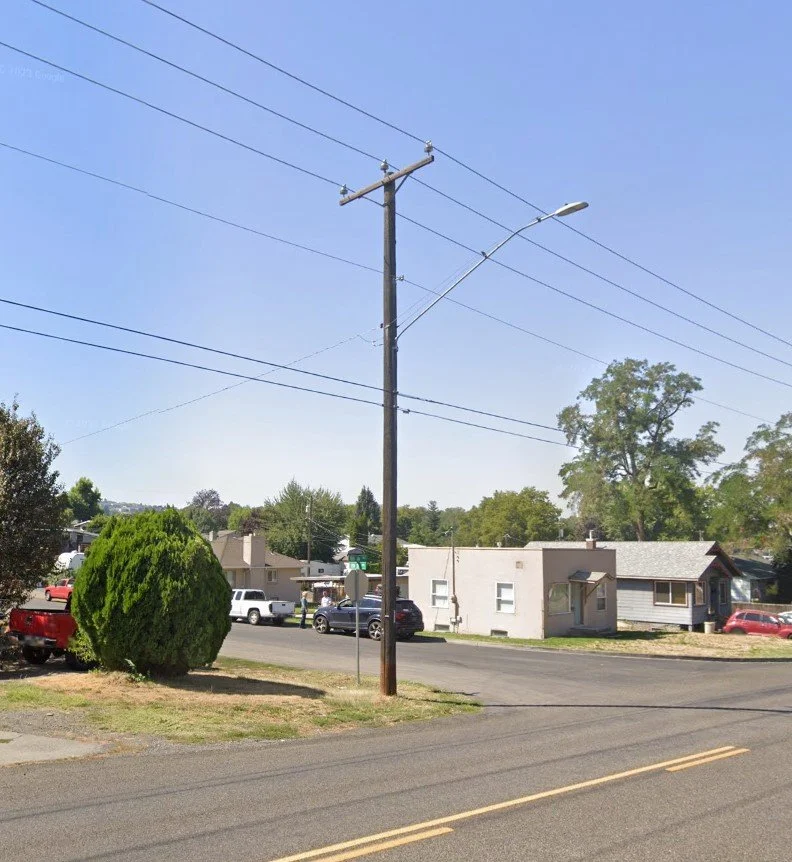
A power pole with two communication cables.
Timelines scale with order size. For mid-sized orders (300–3,000 poles), each phase gets a flat extension — 15 additional days on the survey and 45 additional days on make-ready completion. The FCC's Fifth Report and Order added a third tier that took effect May 7, 2026: Large Orders (3,000–6,000+ poles) run on their own clock — 90 days for the survey, 29 days for the estimate, 120 days for communications-space make-ready and 180 days for power-space make-ready. The MRE process is notoriously slow and, as the following section demonstrates, can seriously threaten project feasibility.
The Problem: Why Make-ready Engineering Drags On
Make-ready is inherently multi-party and sequential. Every company with an existing attachment on a pole must send its own approved contractor to move its own wires, one at a time, before a new attacher can install fiber. That fragmentation can compound delays at every stage. Below is a list of the most common sources of delay.
Bad or missing field data — Outdated pole heights, span measurements and clearance records (and utilities that don't even know who's attached to their own poles) cause rework and disputes.
Contractor scarcity — The limited pool of utility-approved contractors can't keep pace with demand, especially on large deployments.
Sequential make-ready rules — Without OTMR, each attacher's contractor must visit the same pole separately, multiplying time and cost.
Incumbent delay incentives — Utilities and telecoms that own the poles and compete with the new attacher have little reason to move fast.
Permitting and supply chain friction — Tree-trimming permits, transformer availability and local approvals stall work independent of the pole owner or attacher.
The impact is greatest where it matters most: rural, BEAD-targeted communities with older, more congested poles and the thinnest contractor pools. One rural Virginia county averaged 234 days per permit which is well past the FCC's own 165-day standard. The FCC's nominal 148-day cap for standard orders carries no penalty for missing it. In practice, make-ready can take months and even years and every extra day delays fiber delivery, inflates carrying costs and puts BEAD funding deadlines at risk.
The Solutions: How the Industry Is Responding
Regulators and technology providers have each chipped away at the bottleneck, though no single fix eliminates it:
FCC shot-clock rules — These rules carry no automatic penalty. The burden falls on the attacher to invoke self-help or file a complaint.
One-Touch Make-Ready (OTMR) — Lets a single pre-approved contractor move all communications-space attachments at once instead of coordinating separate crews. OTMR is federal law, but it's narrow, simple communications-space work only and it doesn't apply to co-ops or municipals at all.
Better data collection generally — LiDAR and 360° street-level imagery replacing pole-by-pole field walks, and photogrammetric measurement replacing manual height sticks are reducing field-survey time and rework from bad data. We’ve written extensively about this topic, which you can learn about here.
Even together, these fall short: FCC deadlines lack teeth, OTMR coverage is patchy and running full make-ready engineering on every pole in a market — before route decisions are even final — wastes time and money. What the industry really needs is a way to triage poles before committing full engineering resources to them.
The VLT Approach: Red Yellow Green Assessment + Azmyth
Rather than replacing full MRE, VLT's Red Yellow Green (RYG) Assessment is a first step in the process. Our service tells providers and OSP engineers where make-ready complexity actually lives before they commit to full engineering, route selection or budgeting.
Each pole and midspan is scored against NESC clearance rules (or custom rules) into one of three categories:
Red — power make-ready required, meaning a pole change out is likely.
Yellow — communications make-ready required (existing comm wires must move).
Green — no make-ready required (space already exists for the new attachment)

A VLT truck collecting 360 imagery.
The process follows four steps:
1. Data Collection — A vehicle-mounted 360° cameras capture entire cities in days.
2. Azmyth Upload — Imagery is processed in VLT’s proprietary software, Azmyth, at roughly 25,000 images per hour (~142 miles of imagery).
3. Make-Ready Assessment — Engineers extract pole locations, attachment heights and midspan clearances, then apply NESC rules with the click of a button to generate the RYG status.
4. Report Generation — A detailed, exportable report (KML, GeoJSON, Shapefile and more) delivers pole-by-pole make-ready status back to the customer.
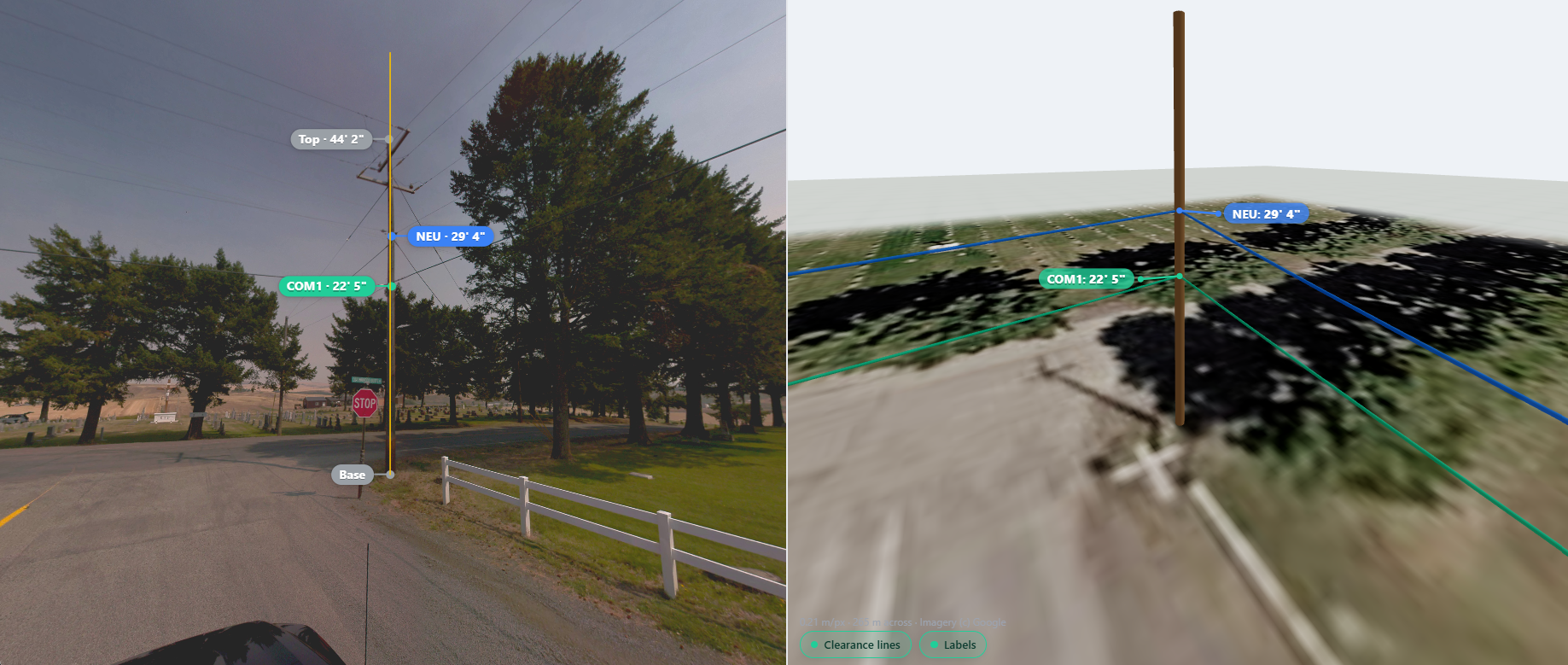
An Annotated Pole Photo and 3D Model in Azmyth.
The result is city-scale visibility in days instead of weeks. This is a level of speed which is nearly untenable for large order projects using traditional methods. We have worked tirelessly to solve the MRE problem, and as they say, the proof is in the pudding. In 2026, our service department has already collected and analyzed data for tens of thousands of poles across ten different states. We have performed RYG, joint use audits and a range of specialized surveys for 30+ industry partners using Azmyth, all in an effort to improve make ready and joint use processes.
MRE will never be easy. It requires teams of professionals across various organizations to work together within a confined timeframe. But that does not mean it should be cumbersome. RYG allows engineers to work faster with better data while saving money by focusing full engineering effort where it's needed.
Find relevant information about our solutions here: